

على جدار مكتب جان كوم المفتوح، كانت هناك رسالة بسيطة تذكّر دائمًا بالرؤية التي كان يشاركها مع شريكه المؤسس براين أكتون: "لا إعلانات! لا ألعاب! لا حيل!"
هذا الشعار البسيط يجسد جوهر WhatsApp الذي وعد مستخدميه بتوفير تجربة بسيطة ومباشرة. فقد تصور مؤسسو التطبيق تطبيقًا يتخلص من واجهات المستخدم المعقدة والإعلانات المزعجة، ويركز بدلاً من ذلك على التواصل السهل والسلس.
ستلخص هذه المقالة الرحلة المضطربة والمثيرة لـ WhatsApp بداياتها كأحد تطبيقات المراسلة إلى أن أصبحت ظاهرة في مجال المراسلة الفورية.
سنلقي نظرة أيضًا على قاعدة المستخدمين الحالية للتطبيق وكيف انتشرت بصمته الرقمية عبر القارات. بالإضافة إلى ذلك، سنعرض بيانات من قاعدة مستخدمينا للكشف عن بعض الأفكار المثيرة للاهتمام حول اتجاهات استخدام WhatsApp.
من الإحباط إلى الابتكار: بدايات WhatsApp

جان كوم وبريان أكتون المصدر: Inc
WhatsApp إنشاء WhatsApp في عام 2007 من قبل جان كوم وبريان أكتون، وهما موظفان سابقان في Yahoo. في البداية، خططا لتطويره كتطبيق لتحديث الحالة، لكن النسخة الأولى واجهت العديد من المشاكل. كان التطبيق يتعطل بشكل متكرر ويستنزف البطارية. تغيرت حظوظ التطبيق عندما أدخلت Apple الإشعارات الفورية، مما ساعد على تحسين وظائف WhatsApp.
نقطة التحول
أدخلت شركة Apple في يونيو 2009 ميزة الإشعارات الفورية التي غيرت WhatsApp. أصبح بإمكان التطبيق الآن إخطار الأصدقاء بتحديثات الحالة. أدرك Koum الإمكانات الكامنة في هذه الميزة وحوّل تركيز التطبيق من تحديثات الحالة إلى المراسلة. وهكذا، WhatsApp في أغسطس 2009 كتطبيق للمراسلة.
واجهت WhatsApp صعوبات WhatsApp في الولايات المتحدة، لكنها حققت نجاحًا في الأسواق الدولية مثل آسيا وأوروبا، حيث كانت رسائل SMS محدودة. وتوسعت لتشمل أنظمة تشغيل متعددة ونمت بسرعة، ووصلت إلى 500 مليون مستخدم نشط بحلول أوائل عام 2014.
نجاح التطبيق جذب انتباه كبار قادة التكنولوجيا، بما في ذلك مارك زوكربيرج من فيسبوك.

الاستحواذ من قبل فيسبوك والتغيير في نموذج الأعمال
كان توسع WhatsAppيحدث في الوقت الذي كانت فيه Facebook تعمل على ترسيخ مكانتها كشركة تركز على خدمات المراسلة عبر الهواتف المحمولة. وكشفت أداة تحليل البيانات التي تستخدمها Facebook WhatsApp المنافس الرئيسي لـ Facebook، خاصة في المناطق خارج الولايات المتحدة.
شكلت هذه الحالة تحديًا معقدًا لفيسبوك، حيث WhatsApp خصمًا محتملاً وأصلًا ذا قيمة لا تقدر بثمن في الوقت نفسه.
تحليل صفقة بيع WhatsAppبقيمة 19 مليار دولار
قررت شركة فيسبوك شراء WhatsApp فبراير 2014. السعر؟ 19 مليار دولار! كان هذا أعلى بـ 12 مرة من تقييم WhatsAppفي العام السابق واحدة من أكبر عمليات الاستحواذ في مجال التكنولوجيا في وادي السيليكون.
- تمت عملية الاستحواذ بدفع 4 مليارات دولار نقدًا و 12 مليار دولار إضافية من أسهم فيسبوك.
- حصل كوم وأكتون على 15 مليار دولار من أسهم فيسبوك.

WhatsApp: مقارنة عملية الاستحواذ بصفقات تكنولوجية أخرى
السعر الفلكي البالغ 19 مليار دولار لصفقة WhatsApp يطرح السؤال التالي: كيف تقارن هذه الصفقة بصفقات الاستحواذ الكبرى الأخرى في مجال التكنولوجيا؟
من بين عمليات الاستحواذ البارزة في مجال التكنولوجيا، يبرز شراء مايكروسوفت لشركة LinkedIn في عام 2016 مقابل 26.2 مليار دولار، مما يعكس توسعًا استراتيجيًا في مجال الشبكات المهنية.
بالإضافة إلى ذلك، يعتبر استحواذ فيسبوك على إنستغرام مقابل حوالي مليار دولار في عام 2012 أمرًا مهمًا، حيث يُظهر خطوة استراتيجية مبكرة للسيطرة على التفاعلات على وسائل التواصل الاجتماعي.

تبرز صفقة WhatsApp ليس فقط بسبب سعرها، ولكن أيضًا لأن WhatsApp، على عكس LinkedIn أو Instagram، لم تكن تحقق إيرادات كبيرة في وقت الاستحواذ. كانت رهانًا على النمو المستقبلي وقاعدة المستخدمين.
المستخدمون النشطون شهريًا على WhatsApp
عندما تم إطلاق WhatsApp في عام 2009، بدأ كخدمة مراسلة صغيرة مع قاعدة مستخدمين متواضعة. بعد أن اشترت Facebook WhatsApp 2014، شهدت منصة المراسلة اكتسابًا هائلاً للمستخدمين. قفز عدد المستخدمين النشطين شهريًا بنسبة 365٪، من 465 مليون إلى 2.7 مليار مستخدم شهريًا.
وهذا يعني أن حوالي ثلث سكان العالم يعتمدون على WhatsApp على اتصال بأصدقائهم وعائلاتهم وزملائهم.
ازداد عدد المستخدمين بشكل مطرد منذ WhatsAppولا تظهر أي علامات على تباطؤ هذا النمو، حيث من المتوقع أن يصل عدد مستخدمي التطبيق إلى 3.14 مليار مستخدم بحلول عام 2025.
| التاريخ | مستخدمو WhatsApp |
| أكتوبر 2010 | 10 ملايين |
| ديسمبر 2011 | 50 مليون |
| يوليو 2012 | 75 مليون |
| أكتوبر 2012 | 100 مليون |
| يناير 2013 | 133 مليون |
| أغسطس 2013 | 300 مليون |
| ديسمبر 2013 | 400 مليون |
| فبراير 2014 | 465 مليون |
| أبريل 2014 | 500 مليون |
| يناير 2015 | 700 مليون |
| سبتمبر 2015 | 900 مليون |
| فبراير 2016 | مليار |
| يناير 2017 | 1.2 مليار |
| ديسمبر 2017 | 1.5 مليار |
| فبراير 2020 | 2 مليار |
| سبتمبر 2021 | 2.16 مليار |
| أبريل 2022 | 2.24 مليار |
| يوليو 2023 | 2.7 مليار |

تعد قاعدة المستخدمين الضخمة دليلاً على قدرة WhatsAppعلى الاستفادة من كل اتجاه رئيسي في مجال الاتصالات الحديثة، بما في ذلك الخصوصية، والواجهة سهلة الاستخدام، والتجربة الخالية من الإعلانات، والمحادثات الجماعية، والمكالمات المرئية.
حجم الرسائل على WhatsApp
WhatsApp الحجم الهائل للرسائل المتبادلة على WhatsApp دليلاً آخر على تأثيره العالمي. فيما يلي بعض الأرقام التي توضح مدى الاستخدام الهائل لهذا التطبيق.
كم عدد الرسائل التي يتم إرسالها يوميًا على WhatsApp؟
يتم إرسال حوالي 100 مليار رسالة على WhatsApp يوم. كما تشير بعض الإحصاءات إلى أنه تم إرسال ما يقرب من 140 مليار رسالة يوميًا في عام 2023. وهذا يعني:
- يتم إرسال ما يقرب من 5.83 مليار رسالة كل ساعة
- يتم إرسال ما يقرب من 97 مليون رسالة كل دقيقة
| التاريخ | عدد الرسائل المرسلة يوميًا |
| أكتوبر 2011 | مليار |
| يناير 2015 | 30 مليار |
| فبراير 2016 | 42 مليار |
| يوليو 2017 | 55 مليار |
| مايو 2018 | 65 مليار |
| أكتوبر 2020 | 100 مليار |
| يوليو 2023 | 140 مليار |

فيما يلي بعض الأرقام الأخرى التي توضح اتجاهات WhatsApp :
- يقضي WhatsApp ما معدله 38 دقيقة يوميًا في استخدام منصة المراسلة.
- المستخدمون نشطون للغاية، حيث يتفقدون التطبيق بشكل متكرر – بمعدل يتراوح بين 23 و25 مرة في اليوم.
- WhatsApp منصة للمكالمات الصوتية والمرئية أيضًا، حيث يستخدم المستخدمون هذه الميزات لأكثر من 2 مليار دقيقة يوميًا.
الديموغرافيا WhatsApp
يُظهر توزيع WhatsApp حسب الجنس صورة متوازنة إلى حد ما مع ميل طفيف نحو المستخدمين الذكور. على الصعيد العالمي، يمثل المستخدمون الذكور 52.4% من قاعدة مستخدمي WhatsAppبينما تمثل المستخدمات الإناث 47.5%.

أظهرت دراسة استكشافية أن مستخدمات WhatsApp نشاطًا بشكل عام على المنصة مقارنة بالمستخدمين الذكور.
مقارنة WhatsApp تطبيقات المراسلة الأخرى
هناك العديد من تطبيقات المراسلة التي تتنافس على جذب انتباهك، كل منها يقدم ميزات ووظائف فريدة. لفهم المشهد العام، دعونا نرى كيف تقارن التطبيقات الأخرى بـ WhatsApp حيث عدد المستخدمين النشطين شهريًا والتنزيلات الشهرية.
المستخدمون النشطون شهريًا لتطبيقات المراسلة
اعتبارًا من أبريل 2024، WhatsApp التطبيق الأكثر شعبية للمراسلة، مع ما يقرب من 2.7 مليار مستخدم نشط شهريًا، متفوقًا بفارق كبير على أقرب منافسيه، Weixin/WeChat و Facebook Messenger.
| خدمة المراسلة | عدد المستخدمين النشطين شهريًا |
| 2.7 مليار | |
| ويشات | 1.34 مليار |
| فيسبوك مسنجر | 1.01 مليار |
| تليغرام | 900 مليون |
| سناب شات | 800 مليون |
| 554 مليون |

تطبيقات المراسلة التنزيلات الشهرية
فيما يتعلق بالتنزيلات الشهرية، WhatsApp القائمة بنحو 50 مليون تنزيل شهريًا. ويليه Snapchat و Telegram، بنحو 41.6 و 36.7 مليون تنزيل على التوالي، مما يدل على حضورهما القوي في سوق تطبيقات المراسلة التنافسية.
ومن الجدير بالذكر أن WhatsApp احتل المرتبة الرابعة في عدد التنزيلات الشهرية على مستوى العالم. وبلغ مجموع تنزيلات WhatsApp و WhatsApp أكثر من ضعف عدد تنزيلات أي خدمة مراسلة فردية أخرى. وهذا يدل على تفضيل قوي WhatsApp .
| تطبيق Messenger | التنزيلات الشهرية (بالملايين) |
| 51.19 | |
| سناب شات | 41.6 |
| تليغرام | 36.7 |
| 27.86 | |
| رسول | 21.31 |
| ويشات | 6.66 |
| راكيتن فيبر مسنجر | 3.54 |
| 3.28 | |
| LINE | 3.06 |
| Signal Private Messenger | 2.92 |

أهم البلدان من حيث WhatsApp : الأسواق الرئيسية والاتجاهات الفريدة
نحن نعلم بالفعل أن WhatsApp قاعدة مستخدمين ضخمة منتشرة في 180 دولة. وهي تدعم 60 لغة على نظام Android و40 لغة على نظام iOS.
وفقًا لـ GlobalWebIndex، يستخدم 69٪ من جميع مستخدمي الإنترنت، باستثناء الصين، WhatsApp.
تضم الهند أكبر عدد من WhatsApp في العالم، حيث يبلغ عدد المستخدمين النشطين حوالي 535.8 مليون مستخدم، ويزداد هذا العدد بنسبة 16.6% كل عام.
علاوة على ذلك، يعتبر 80% من الشركات الصغيرة والمتوسطة في الهند WhatsApp أساسية لتوسيع نطاق عملياتها التجارية.
تضم الدول الثلاث الأولى (الهند والبرازيل وإندونيسيا) مجتمعة أكثر من نصف مليار مستخدم.
| البلد | WhatsApp (بالملايين) |
| الهند | 535.8 |
| البرازيل | 139.3 |
| الولايات المتحدة | 91.3 |
| إندونيسيا | 86.9 |
| المكسيك | 69.7 |
| روسيا | 66.7 |
| باكستان | 52.3 |
| ألمانيا | 51.9 |
| الفلبين | 51.2 |
| نيجيريا | 51 |

WhatsApp حول العالم
أمريكا اللاتينية: WhatsApp مكانة مهيمنة في أمريكا اللاتينية، حيث يستخدم أكثر من 64% من السكان تطبيق المراسلة هذا. في الواقع، تجاوزت معدلات الاستخدام في بعض دول أمريكا اللاتينية، مثل البرازيل والمكسيك، 90% في عام 2022.
وفقًا لجمعية النمو المتنقل (MGA)، قد يعزى هذا الانتشار الواسع إلى ارتفاع تكلفة باقات الهواتف المحمولة في المنطقة. WhatsApp بديلاً أكثر تكلفة، حيث يتيح للمستخدمين التواصل بحرية عبر شبكة Wi-Fi.
الشرق الأوسط: كشفت دراسة أجرتها جامعة نورثوسترن في قطر أن WhatsApp بشعبية واسعة في العديد من دول الشرق الأوسط. حيث يستخدم أكثر من 75% من مواطني مصر والأردن ولبنان وقطر والمملكة العربية السعودية وتونس والإمارات العربية المتحدة WhatsApp بشكل نشط.
علاوة على ذلك، تبرز البيانات الصادرة عن Statista أن انتشار WhatsAppفي الإمارات العربية المتحدة قوي بشكل خاص، حيث يستخدم أكثر من 80.2% من السكان هذه المنصة.
أفريقيا: في أفريقيا، تفتخر دول مثل كينيا وجنوب أفريقيا بمعدلات انتشار عالية للغاية بين المستخدمين، تتجاوز 95٪. من المتوقع أن يستمر عدد WhatsApp في أفريقيا في النمو، حيث تشير التقديرات إلى زيادة قدرها 43.8 مليون مستخدم (أو 47.79٪) بين عامي 2024 و 2029.
الولايات المتحدة الأمريكية: لا WhatsApp بنفس القدر من الانتشار في الولايات المتحدة (مكان نشأته!) كما هو الحال في البلدان الأخرى. ومع ذلك، فإنه يزداد شعبية، خاصة بين الشباب (18-34 عامًا) – حيث يندرج حوالي 3 من كل 10 WhatsApp في الولايات المتحدة ضمن هذه الفئة العمرية.
في أحدث تقرير ربع سنوي للشركة، أعلن مارك زوكربيرج أن عام 2024 سيكون عام WhatsApp الولايات المتحدة، ويبدو أن هذا الأمر أصبح حقيقة واقعة.
تلعب العرقية أيضًا دورًا في أنماط الاستخدام. يستخدم الأمريكيون من أصل إسباني هذه القناة أكثر من غيرهم (46٪)، يليهم الأمريكيون من أصل أفريقي (23٪) والأمريكيون من أصل أوروبي (16٪).
أوروبا: يبلغ عدد مستخدمي WhatsApp 121.93 مليون مستخدم في أوروبا. ويتوقع تقرير صدر مؤخرًا أن تنمو قاعدة مستخدميه بمقدار 3 ملايين مستخدم، أو 2.52٪، لتصل إلى 124.93 مليون مستخدم بحلول عام 2028.
الآن، دعونا نرى كيف تسير أمور WhatsApp .
التغيير في نموذج WhatsApp بعد استحواذ Meta
عندما اشترى Facebook WhatsApp، ثارت تساؤلات حول كيفية تحقيق الأرباح. وإليك كيف WhatsApp استراتيجية Facebook لتحويل WhatsApp إلى مصدر للربح:
- إطلاق WhatsApp (يناير 2018): تطبيق منفصل مصمم للشركات للتواصل مع العملاء. يوفر أدوات للأتمتة وفرز الرسائل ووقت استجابة أسرع.
- إطلاق واجهة برمجة WhatsApp (أغسطس 2018): خدمة مدفوعة توفر ميزات متقدمة للشركات، بما في ذلك إمكانية إرسال رسائل تسويقية وعروض ترويجية عبر التطبيق.
WhatsApp يصبح WhatsApp مهرجانًا إعلانيًا كما كان يخشى البعض. بل وجدوا طريقة لتلبية احتياجات الشركات دون التضحية بتجربة المستخدم التي جعلت التطبيق شائعًا في المقام الأول. إنه عمل متوازن، ولكن يبدو أنه ناجح حتى الآن.
لنلقِ نظرة على بعض الأرقام ونقيس أداء WhatsApp .
كم عدد الأشخاص الذين يرسلون رسائل إلى WhatsApp كل يوم؟
يستخدم أكثر من 50 مليون شركة WhatsApp التجاري، ويتفاعل أكثر من 175 مليون شخص مع الحسابات التجارية يوميًا. يشير هذا الرقم الكبير إلى استجابة إيجابية من المستخدمين تجاه هذه القناة.
ما هو عدد تنزيلات WhatsApp ؟
سجل تطبيق WhatsApp 316 مليون عملية تنزيل على مستوى العالم في عام 2023، بزيادة كبيرة بلغت 14% عن العام السابق. وتتمتع المنصة بهيمنة خاصة في منطقة آسيا والمحيط الهادئ (800 مليون مستخدم) وأمريكا اللاتينية، مع أسواق رئيسية مثل الهند والبرازيل في الصدارة.
نما WhatsApp بسرعة، حيث وصل إلى 200 مليون مستخدم نشط شهريًا في يونيو 2023 (4 أضعاف ما كان عليه في يوليو 2020).

إليك ما يجعل WhatsApp جذابًا للغاية:
- مع معدل فتح يبلغ 98٪، تتمتع WhatsApp بفرصة كبيرة للغاية في أن يراها العملاء مقارنةً بالتسويق التقليدي عبر البريد الإلكتروني أو الرسائل النصية.
- في حين أن معدلات التحويل عبر البريد الإلكتروني والرسائل النصية تتراوح عادة بين 2 و5٪، فإن WhatsApp التحويل WhatsApp أعلى بكثير، حيث تتراوح بين 45 و60٪.
- يتيح الاستفادة من WhatsApp للشركات الحفاظ على معدل توصيل يبلغ حوالي 90٪، مما يضمن وصول رسائلك إلى الجمهور المستهدف.
منذ استحواذ Meta عليها، WhatsApp إلى أداة يمكن أن تعود بفوائد كبيرة على الشركات.
كما صرح مارك زوكربيرج نفسه، "WhatsApp حقًا الفصل التالي، حيث ستكون المراسلة التجارية والتجارة أمرًا مهمًا فيها." يبدو أن هذه الرؤية تتحقق أمام أعيننا.
WhatsApp: الإيرادات والملكية
على الرغم من أن WhatsApp بعد مصدر دخل مهم لشركة Meta، إلا أن ذراعها التجاري، WhatsApp ، يبدو واعداً. في الوقت الحالي، تحقق الشركة إيراداتها من WhatsApp API وClick to WhatsApp وPayments.
الإحصائيات الرئيسية:
- WhatsApp إيرادات بقيمة 8.7 مليار دولار في عام 2021.
- في عام 2023، من المتوقع أن تحقق WhatsApp وحدها أرباحًا تزيد عن 382 مليون دولار.
- أنفقت الشركات المتوسطة والكبيرة حوالي 38.7 مليون دولار على WhatsApp في عام 2019. ومن المتوقع أن يقفز هذا الرقم إلى 3.6 مليار دولار بحلول عام 2024.

قاعدة مستخدمي TimelinesAI : نظرة أعمق
WhatsApp شعبية WhatsApp . تظهر الإحصاءات العالمية صورة لمنصة تضم مليارات المستخدمين. ومع ذلك، قمنا بتعميق بحثنا في قاعدة مستخدمينا. فيما يلي بعض الأرقام التي تكشف عن تفاصيل مثيرة للاهتمام حول كيفية تفاعل الأشخاص على التطبيق.
نشاط الرسائل حسب الجهاز
| البلد | الجهاز | إجمالي المستخدمين النشطين | متوسط عدد الرسائل في الساعة |
| البرازيل | Android | 802 | 39.92 |
| البرازيل | iOS | 615 | 26.67 |
| الهند | Android | 921 | 29.17 |
| الهند | iOS | 609 | 21.42 |
| الولايات المتحدة | Android | 602 | 30.79 |
| الولايات المتحدة | iOS | 417 | 25.08 |
| المملكة المتحدة | Android | 379 | 28.46 |
| المملكة المتحدة | iOS | 215 | 21.75 |
| ألمانيا | Android | 577 | 32.54 |
| ألمانيا | iOS | 436 | 23.13 |
| المكسيك | Android | 532 | 31.42 |
| المكسيك | iOS | 489 | 29.58 |
 المصدر: بيانات TimelinesAI [اعتبارًا من 01/08/2024]
يختلف WhatsApp بشكل كبير بين البلدان والأجهزة. فيما يلي بعض النتائج الرئيسية:
- عمومًا، يرسل مستخدمو Android عددًا أكبر من الرسائل مقارنة بمستخدمي iOS في جميع البلدان، مما يشير إلى وجود اختلافات محتملة في سلوك المستخدمين أو قدرات الأجهزة.
- تظهر البرازيل والهند باستمرار معدلات رسائل أعلى، مما يشير إلى WhatsApp أكثر كثافة WhatsApp في هاتين المنطقتين. ويمكن أن يعزى ذلك إلى عوامل مختلفة مثل أنماط التواصل الثقافية، وأسعار الرسائل القصيرة، وسهولة الاستخدام، والقدرة على تحمل التكاليف، وغياب الإعلانات.
- يبلغ متوسط عدد الرسائل في الساعة في الولايات المتحدة وأوروبا (المملكة المتحدة وألمانيا) أقل مقارنة بالمناطق الأخرى.
أفضل المواقع WhatsApp
يتجلى الانتشار العالمي WhatsAppفي معدلات التفاعل العالية في مختلف البلدان. لنلقِ نظرة على متوسط عدد الرسائل المرسلة لكل جهاز في بعض المناطق الرئيسية.
| البلد | متوسط عدد الرسائل لكل جهاز |
| البرازيل | 227 |
| الهند | 117 |
| الولايات المتحدة | 124 |
| المملكة المتحدة | 153 |
| ألمانيا | 157 |
| المكسيك | 166 |

المصدر: بيانات TimelinesAI [اعتبارًا من 01/08/2024]
تتصدر البرازيل القائمة بمتوسط مثير للإعجاب يبلغ 227 رسالة مرسلة لكل جهاز. ويُظهر وجود كل من البرازيل والمكسيك مدى WhatsApp في أمريكا اللاتينية.
كما أن التباين في حجم الرسائل لكل جهاز عبر هذه البلدان يعكس التفضيلات الثقافية في مجال الاتصالات والجوانب الاقتصادية المتعلقة بقدرة المستخدمين على تحمل تكاليف الرسائل النصية القصيرة.
على سبيل المثال، تظهر الولايات المتحدة الأمريكية استخدامًا أقل بسبب انتشار أجهزة iPhone، ومنصة SMS قوية، واختلاف عادات السفر، حيث لا يسافر الأمريكيون إلى الخارج بنفس تواتر الأوروبيين، مما يقلل من الحاجة إلى تطبيق مثل WhatsApp يتفوق في الاتصالات الدولية.
أنماط تفاعل المستخدمين
في صميم رؤى منصتنا يوجد نظرة مثيرة للاهتمام حول كيفية WhatsApp تفاعل المستخدمين على WhatsApp بشكل كبير بين أنواع الأجهزة المختلفة. تسلط البيانات الضوء على تباين لافت للنظر: يبلغ متوسط عدد الرسائل التي يرسلها مستخدمو أجهزة Android 479 رسالة في اليوم، بينما يرسل مستخدمو أجهزة iOS حوالي 270 رسالة يوميًا.

المصدر: بيانات TimelinesAI [اعتبارًا من 01/08/2024]
لماذا هذا التفاوت؟
هناك عدة عوامل يمكن أن تسهم في هذا الاختلاف الكبير في حجم الرسائل:
- إمكانية الوصول واختراق السوق: تهيمن أجهزة Android، المعروفة بتنوعها الواسع من حيث السعر المعقول وإمكانية الوصول إليها، على الأسواق التي WhatsApp بشكل كبير على WhatsApp للتواصل الشخصي والتجاري.
- تفضيلات النظام البيئي: قد يتمتع مستخدمو iOS بإمكانية الوصول إلى مجموعة متنوعة من خدمات المراسلة المتكاملة مثل iMessage، مما قد يقلل من اعتمادهم على التطبيقات المستقلة مثل WhatsApp.
- التأثير الثقافي: في بعض المناطق، تجعل مرونة Android وتكلفته المنخفضة منه الخيار المفضل للاتصالات المتنقلة، مما يؤدي إلى زيادة WhatsApp على هذه الأجهزة.
أوقات الذروة
تكشف بياناتنا عن أنماط مثيرة للاهتمام في ساعات الذروة في مختلف الأسواق الرئيسية. يمكن أن يساعد فهم ساعات الذروة الشركات على تحسين جهودها في مجال التسويق وخدمة العملاء على WhatsApp.
| البلد | ساعة الذروة (24 ساعة) |
| البرازيل | 11 |
| الهند | 13 |
| الولايات المتحدة | 14 |
| المملكة المتحدة | 9 |
| ألمانيا | 13 |
| المكسيك | 11 |

المصدر: بيانات TimelinesAI [اعتبارًا من 01/08/2024]
تشير البيانات إلى وجود اتجاه عام WhatsApp في ذروته بين الساعة 11 صباحًا و 2 ظهرًا (11 صباحًا و 2 ظهرًا). وهذا يشير إلى أن المنصة تُستخدم بكثرة خلال ساعات العمل أو في أوائل فترة ما بعد الظهر في هذه البلدان.
اتجاهات الاستخدام الأسبوعية
تقدم البيانات الواردة أدناه صورة واضحة عن أنماط WhatsApp على مدار الأسبوع. ومن الواضح أن هناك تباينًا كبيرًا بين استخدام التطبيق خلال أيام الأسبوع وعطلة نهاية الأسبوع.
| اليوم | متوسط عدد الرسائل لكل جهاز |
| الاثنين | 522 |
| الثلاثاء | 653 |
| الأربعاء | 548 |
| الخميس | 495 |
| الجمعة | 425 |
| السبت | 78 |
| الأحد | 33 |

المصدر: بيانات TimelinesAI [اعتبارًا من 01/08/2024]
أعلى نشاط يوم الثلاثاء:
- يوم الثلاثاء يشهد أعلى متوسط لعدد الرسائل لكل جهاز، حيث يبلغ 653 رسالة.
الاتساق في منتصف الأسبوع:
- يوم الاثنين والأربعاء والخميس يشهدون أيضًا نشاطًا كبيرًا، بمتوسط 522 و548 و495 رسالة على التوالي. وهذا يشير إلى مستوى ثابت من المشاركة خلال أيام الأسبوع.
انخفاض مع اقتراب نهاية الأسبوع:
- تبدأ نشاطات المراسلة في الانخفاض يوم الجمعة، مع 425 رسالة، وتنخفض بشكل ملحوظ خلال عطلة نهاية الأسبوع، مع 78 رسالة فقط يوم السبت و33 رسالة يوم الأحد. يشير هذا النمط إلى أن المستخدمين قد يكونون أقل نشاطًا على WhatsApp عطلة نهاية الأسبوع، ربما بسبب الأنشطة الشخصية أو وقت الراحة.
اتجاهات النمو
هناك اتجاه عام نحو الارتفاع في عدد الأجهزة النشطة لكل من Android و iOS على مدار العام. وهذا يدل على زيادة استخدام هذه الأداة الشائعة للاتصال والاعتماد عليها.
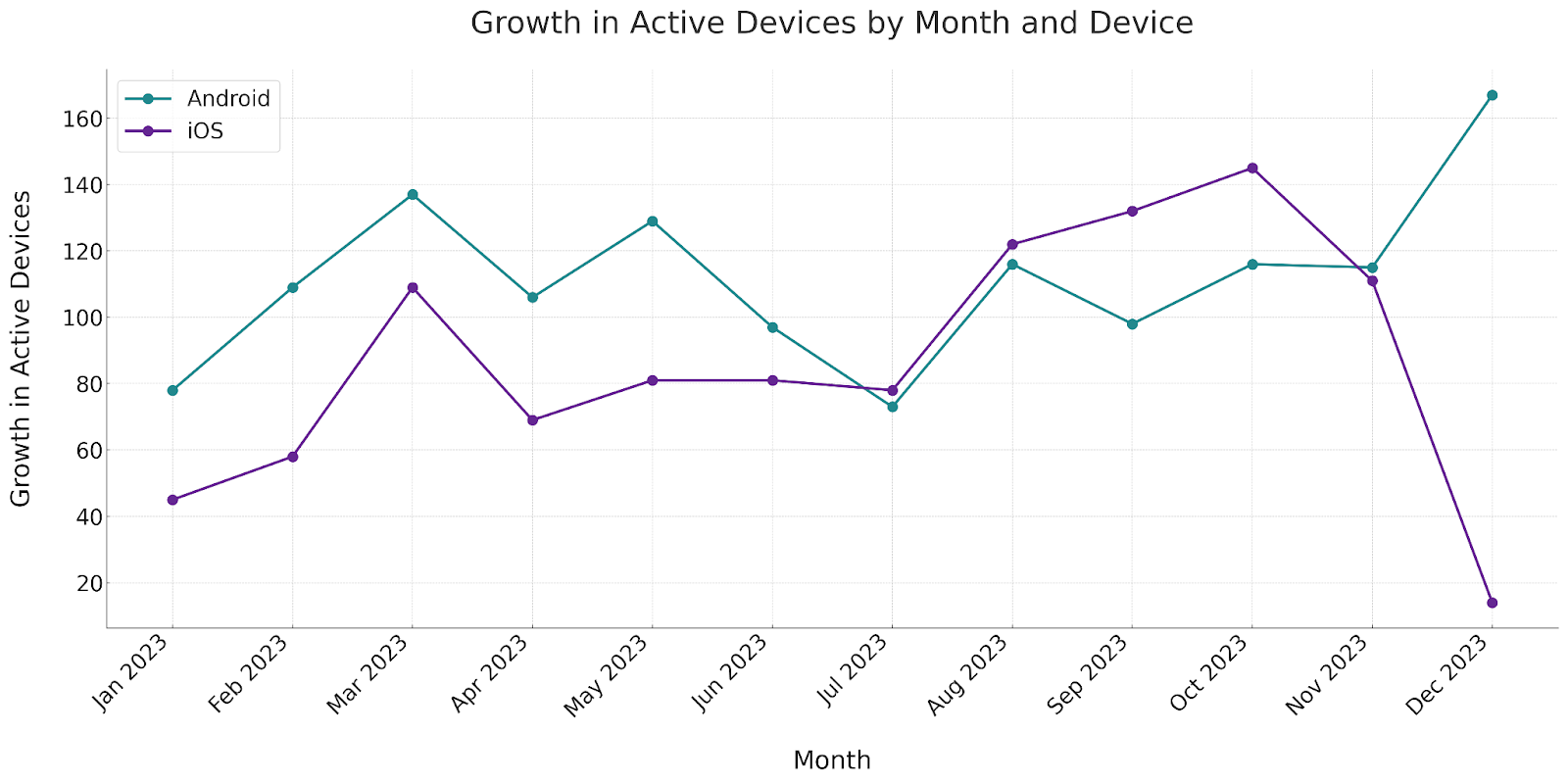
المصدر: بيانات مستخدمي Timelines [اعتبارًا من 01/08/2024]
Android مقابل iOS: يظهر Android باستمرار نمواً أعلى في الأجهزة النشطة مقارنةً بـ iOS، باستثناء بضعة أشهر تجاوز فيها نمو iOS نمو Android (أغسطس وسبتمبر).
مستقبل WhatsApp: ما الذي ينتظرنا في المستقبل؟
نظرًا للانتشار العالمي الواسع WhatsAppوأنماط الاستخدام المتنوعة، من الواضح أن هذه المنصة جزء لا يتجزأ من التواصل اليومي لملايين الأشخاص حول العالم.
لا WhatsApp أي علامات على تباطؤ WhatsApp . إليك لمحة عن مستقبل WhatsApp إلى الاتجاهات والميزات القادمة:
التركيز على WhatsApp
من المرجح أن تستفيد الشركات من مجموعة واسعة من الميزات مثل الدفع داخل التطبيق والتجارة التخاطبية التي تدعمها روبوتات الدردشة التي تعمل بالذكاء الاصطناعي. وقد يؤدي ذلك إلى زيادة استخدام WhatsApp خاصة في مناطق مثل الهند والبرازيل.
التوازن بين التحديات التنظيمية
مع تشديد الحكومات في جميع أنحاء العالم للوائح التنظيمية على المنصات الرقمية، WhatsApp تضطر WhatsApp إلى تعديل سياساتها لتتوافق مع المعايير القانونية الجديدة، مما قد يؤثر على تجربة المستخدم.
تحسينات الأمان
على الرغم من استخدام WhatsApp للتشفير من طرف إلى طرف، تتزايد مخاوف المستخدمين بشأن خصوصية البيانات. وينطبق هذا بشكل خاص على ممارسات WhatsAppفي مشاركة البيانات مع Facebook.
الميزات والتحديثات القادمة
كما WhatsApp لإطلاق ميزات جديدة مثل التكامل مع منصات الدردشة الخارجية مثل Telegram و Discord مباشرة داخل WhatsApp خال أسماء المستخدمين لتسجيل الدخول إلى WhatsApp من الاعتماد على أرقام الهواتف.
بفضل تركيزها على الابتكار والتكامل وتجربة المستخدم، WhatsApp المتوقع أن تظل WhatsApp رائدة في عالم الاتصالات المتطور باستمرار.
الخلاصة: الإرث الدائم WhatsApp
تتميز قصة WhatsAppبالابتكار والتركيز على المستخدم والسعي الدؤوب للتواصل. فقد طمس الحدود الجغرافية وغير بشكل جذري طريقة تواصلنا.
اليوم، يتجاوز تأثير WhatsAppحدود المحادثات الشخصية. فقد غيّر طريقة تواصل الشركات مع العملاء. أثبتت القدرة على الوصول إلى العملاء مباشرة عبر هواتفهم المحمولة، متجاوزة القنوات التقليدية مثل البريد الإلكتروني، أنها عامل تغيير جذري.
نظرًا لأن Meta، الشركة الأم WhatsApp، تركز على تطوير المزيد من أدوات الأعمال، فمن المقرر أن تصبح المنصة عنصرًا أكثر أهمية في استراتيجية الاتصالات التجارية الناجحة.


